

Cultivation scaffolds are 3D structures that provide support for animal cells to grow and form tissues, mimicking the natural extracellular matrix (ECM) found in muscle. These scaffolds are essential for cultivated meat production, influencing texture, structure, and scalability.
Here’s a quick breakdown of scaffold materials:
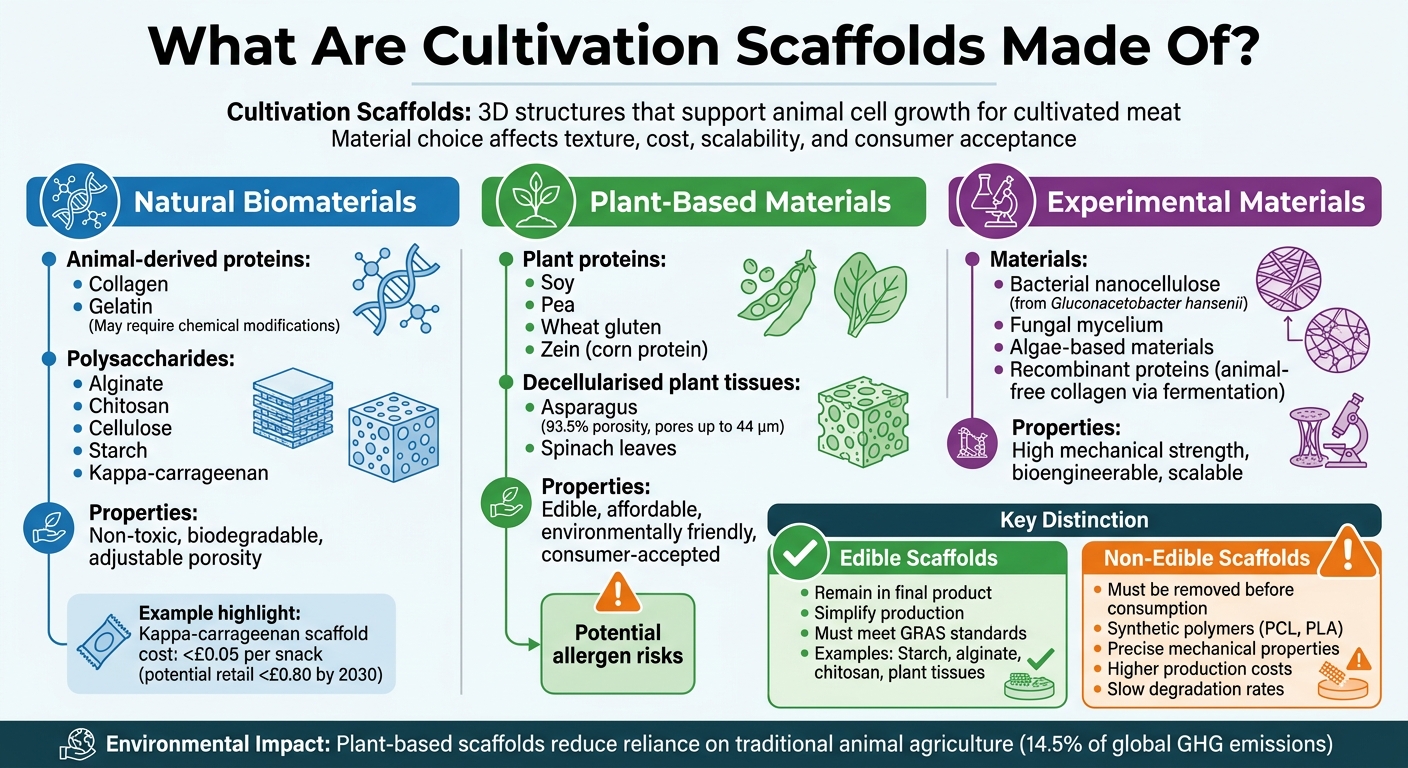
- Natural Biomaterials: Includes animal-derived proteins (like collagen) and polysaccharides (e.g., alginate, chitosan, cellulose). Some, like kappa-carrageenan, are edible and cost-effective.
- Plant-Based Materials: Soy, pea, wheat gluten, and decellularised plant tissues (e.g., asparagus) offer edible, consumer-friendly options.
- Experimental Materials: Bacterial nanocellulose, fungal mycelium, algae-based materials, and recombinant proteins show promise for advanced applications.
Edible scaffolds simplify production and stay in the final product, while non-edible scaffolds (e.g., synthetic polymers) require removal, adding complexity.
Key considerations include cost, cell compatibility, and consumer preferences for plant-based, animal-free solutions. Scaffold choice also affects production efficiency and aligns with reducing reliance on traditional meat production.
Cultivation Scaffold Materials: Types, Examples, and Key Properties
The Elements of Cultured Meat: Scaffolds 101 with Natalie Rubio | New Harvest 2017
sbb-itb-c323ed3
Common Materials Used in Cultivation Scaffolds
Cultivation scaffolds rely on a variety of materials, each chosen for its compatibility with cells, affordability, and appeal to consumers. The material selection directly influences how effectively cells attach, grow, and form structured tissue.
Natural Biomaterials
Animal-derived proteins, such as collagen and gelatin, are widely used due to their compatibility with biological systems and their ability to provide familiar cues for cell growth. However, they may lack specific binding sites for cells, which sometimes necessitates chemical modifications or the inclusion of adhesion peptides like RGD motifs [3].
Polysaccharides – including alginate, chitosan, cellulose, and starch – are commonly used because they are non-toxic, biodegradable, and can form hydrogels with adjustable porosity [1][3]. Marine-sourced carrageenan, for example, offers dietary fibre benefits. In November 2025, researchers developed an edible scaffold from kappa-carrageenan and quince seed mucilage, which supported bovine myoblast growth and matched the amino acid profile of traditional meat. A cost analysis estimated production at under £0.05 per snack, with potential retail pricing below £0.80 by 2030 [4].
Plant-Based Materials
Plant-derived proteins like those from soy, pea, wheat gluten, and zein (a protein from corn) are gaining traction as edible and affordable scaffold options [1][3]. Their environmental advantages and consumer acceptance make them appealing, though some may pose allergen risks that need to be addressed.
Decellularised plant tissues offer a particularly inventive solution. For instance, in May 2024, researchers utilised decellularised asparagus as a scaffold for engineering porcine skeletal muscle. The asparagus' horizontally aligned vascular bundles enabled proper alignment and attachment of C2C12 myoblasts. The resulting cultivated meat prototype had a texture comparable to raw pork loin [2]. Additionally, the asparagus scaffold's natural vascular system – with 93.5% porosity and pore sizes up to 44 μm – facilitated efficient nutrient delivery and waste removal [2].
New and Experimental Materials
Bacterial nanocellulose, produced by bacteria like Gluconacetobacter hansenii, offers excellent mechanical strength and compatibility with cells [1]. Fungal mycelium is another promising option, capable of self-growing and being bioengineered to improve nutritional content, flavour, and texture. Algae-based materials, such as alginate and seaweed derivatives, are edible and already widely accepted in the food industry [1][3].
Recombinant proteins, including animal-free collagen created through microbial fermentation, are another exciting development. These proteins provide high compatibility with cells while eliminating the need for animal-derived materials [1][3]. They also offer cost-saving potential by utilising agricultural by-products and improving scalability for products like whole-cut steaks. These advancements highlight the evolving possibilities in scaffold materials, paving the way for discussions on their edibility and environmental implications in cultivated meat production.
Edible vs Non-Edible Scaffolds
When it comes to Cultivated Meat, scaffolds serve as the backbone of production. But not all scaffolds are meant to be eaten. The decision between edible and non-edible scaffolds plays a key role in how the meat is manufactured and what consumers ultimately find on their plates.
Edible Scaffolds
Edible scaffolds are designed to remain in the final product. Materials like starch, alginate, chitosan, and even decellularised plant tissues - think spinach leaves or asparagus stems - fall into this category [1][3]. These materials mimic the texture and structure of natural meat, eliminating the need for costly extraction processes.
Since they stay in the product, edible scaffolds must comply with GRAS (Generally Recognised as Safe) standards [1]. This approach not only simplifies the production process but often resonates better with consumers, who tend to view these materials as more natural [3].
On the other hand, non-edible scaffolds offer mechanical precision but come with added challenges.
Non-Edible Scaffolds
Non-edible scaffolds, like synthetic polymers such as polycaprolactone (PCL) or polylactic acid (PLA), need to be removed before the product is ready to eat [3]. These materials are prized for their ability to provide precise mechanical properties and consistent quality. However, their use introduces extra layers of complexity.
"Many [synthetic polymers] are not edible and have slow degradation rates. This creates the need for a costly step of cell dissociation from scaffolds after the cell proliferation phase."
- npj Science of Food [3]
Removing these scaffolds can involve cell dissociation or controlled biodegradation, both of which add to production costs and limit scalability [3]. Some newer scaffolds are being developed to degrade quickly into non-toxic by-products during the maturation process. However, this remains a work in progress and a focus of ongoing research [3].
Environmental Impact and Consumer Expectations
Environmental Impact of Scaffold Materials
The choice of scaffold materials plays a pivotal role in determining the environmental footprint of Cultivated Meat. Materials derived from legumes, cereals, algae, and fungi significantly reduce dependence on traditional animal agriculture, which accounts for a staggering 14.5% of global greenhouse gas emissions [3].
Edible scaffolds, such as alginate, cellulose, and decellularised plant tissues, offer a distinct advantage. They eliminate the need for expensive removal steps, streamlining the manufacturing process. This not only reduces production costs but also lowers the carbon footprint associated with Cultivated Meat [1][3]. On the other hand, synthetic polymers used in medical-grade scaffolds may undermine these environmental benefits. As highlighted in a study:
"The materials used in medical scaffolds may not be sustainable or may have a significant environmental impact, which contradicts the proposal of cultured meat as a more sustainable alternative to conventional meat." - npj Science of Food [3]
Decellularised plant scaffolds, made from sources like asparagus or spinach, stand out as particularly promising. Their natural abundance and biodegradability make them well-suited for large-scale production, aligning with sustainability goals [2]. These eco-friendly qualities also resonate strongly with consumer values.
What Consumers Want from Scaffolds
Consumer expectations for scaffold materials are increasingly shaped by sustainability considerations. There is a growing demand for animal-free, edible scaffolds that avoid chemical removal processes. Plant-based options such as soy, wheat, and cellulose are often preferred over synthetic polymers, which can feel overly technical or artificial [3].
Clear labelling is essential. While plant-based scaffolds offer clear environmental advantages, ingredients like soy or wheat must be clearly identified to safeguard those with allergies or food sensitivities [3]. Beyond safety, consumers also expect scaffold materials to enhance the quality of the final product. This means scaffolds should replicate the complex structure of natural muscle while preserving the texture, flavour, and nutritional value that people associate with meat [2][3].
At Cultivated Meat Shop, we prioritise transparency to help consumers navigate these technical details. As Cultivated Meat becomes more accessible in the UK, understanding the role of scaffold materials will empower shoppers to make choices that align with their values and dietary needs.
Conclusion
The choice of cultivation scaffold materials plays a key role in shaping the future of Cultivated Meat, influencing its environmental impact, affordability, and appeal to consumers. Instead of just listing natural, plant-based, or experimental materials, it’s important to consider how these decisions affect the industry's long-term success.
Edible scaffolds offer a practical advantage by simplifying production processes and reducing costs. This makes Cultivated Meat more competitive in the market while catering to consumer preferences for natural and recognisable ingredients. This shift could mark a major step forward for its commercial success.
Beyond production, these materials directly affect the quality of the final product. As Cultivated Meat gets closer to becoming available in the UK, scaffolds will be crucial for delivering the right texture and structural integrity. This is a key factor in how cultivated meat tastes and feels to the consumer. For instance, replicating the texture of traditional meat and maintaining its form during cooking requires scaffolds that match muscle stiffness (2–12 kPa) [3]. Choosing the right scaffold is not just about quality - it’s also about meeting environmental goals and aligning with sustainability efforts compared to beef.
FAQs
What are the best scaffold materials for whole-cut meat?
Plant-based proteins, like soy protein and textured vegetable protein, are among the top choices for scaffolding in whole-cut cultivated meat. Another innovative option is decellularised plant leaves, which come with natural vascular networks that aid in cell growth. These materials play a key role in replicating the structure and texture of conventional meat, helping to create a product that feels and tastes authentic.
Are scaffold materials safe to eat?
Yes, the scaffold materials used in cultivated meat production are considered safe for consumption. They are typically made from food-grade ingredients like plant proteins, seaweed, gelatin, and other edible biomaterials. These components are carefully chosen to comply with safety and quality regulations set for human consumption in various countries.
How do scaffolds affect cost and sustainability?
Scaffolds play a key role in shaping both the cost and the environmental impact of cultivated meat production. They directly affect material expenses and how efficiently the meat can be produced. Opting for cost-effective, scalable, and renewable biomaterials - like plant-based alternatives - can significantly reduce production costs. Beyond that, scaffolds help streamline manufacturing processes, cutting down on waste and energy use. This not only makes production more efficient but also reduces its environmental footprint.


