

Cultivated meat offers a consistent nutrient profile that matches or exceeds its conventional counterpart. It provides high levels of protein, iron, vitamin B12, zinc, and omega-3 fatty acids. Unlike conventional meat, its production process allows for controlled nutrient content, making it a reliable choice for health-conscious consumers. Here's a quick overview of its key nutrients:
- Protein: 20–25 g per 100 g, with all essential amino acids and high digestibility.
- Iron: Comparable to traditional beef (2.6–3.6 mg per 100 g), with high absorption rates due to haem iron.
- Vitamin B12: Matches or slightly exceeds conventional meat, ensuring consistent levels.
- Zinc: Similar to conventional meat (5–7 mg per 100 g), with excellent bioavailability.
- Omega-3 Fatty Acids: Customisable levels, up to 2 g per 100 g, surpassing most conventional meats.
Cultivated meat is produced in controlled environments, eliminating risks like foodborne pathogens and antibiotic residues. It also allows for nutrient adjustments, such as increasing omega-3 content or reducing saturated fats. This makes it a forward-thinking option for meeting nutritional needs while addressing modern dietary concerns.
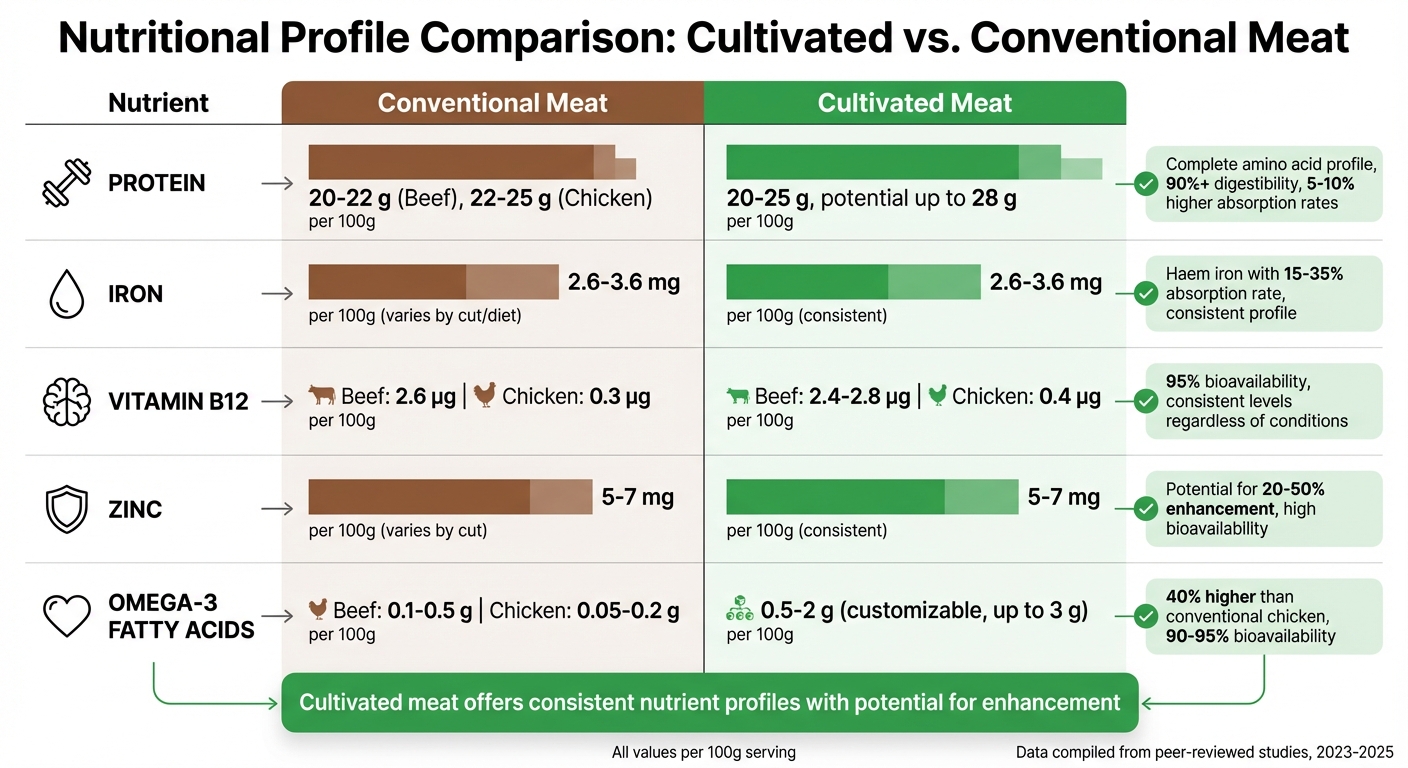
Nutritional Comparison: Cultivated Meat vs Conventional Meat - 5 Key Nutrients
1. Protein
Cultivated meat holds its own when it comes to protein content, delivering levels that rival, and in some cases surpass, conventional meat. Typically, it offers 20–25 g of protein per 100 g serving, which is in line with or slightly higher than conventional beef (around 20–22 g/100 g) and chicken (22–25 g/100 g). A 2023 study from Tufts University even found that cultivated chicken closely mirrors conventional chicken in protein content, with 23.5 g compared to 24 g per 100 g [4][5].
Nutritional content compared to conventional meat
Cultivated meat boasts a complete protein profile, meaning it contains all nine essential amino acids that the human body needs but cannot produce. For comparison, conventional beef typically has about 8 g of essential amino acids per 100 g, while cultivated meat could offer a 10–15% increase in branched-chain amino acids, according to lab analyses [6].
Bioavailability and health benefits
One of the standout features of cultivated meat is its high bioavailability, with over 90% digestibility [7][8]. This makes it particularly effective at supporting muscle repair, strengthening the immune system, and promoting satiety. Early in vitro studies even suggest that cultivated meat might have 5–10% higher absorption rates than conventional meat. This is likely due to its uniform cell structure and the absence of tough connective tissues.
Potential for enhancement in cultivated meat
Cultivated meat offers exciting possibilities for nutritional customisation. Manufacturers can tweak and optimise protein levels, with some prototypes already achieving up to 28 g of protein per 100 g, surpassing the capabilities of traditional meat production. This kind of precision simply isn’t feasible with conventional livestock farming.
With such consistent and adjustable protein advantages, cultivated meat sets the stage for deeper comparisons, starting with iron.
sbb-itb-c323ed3
2. Iron
Iron plays a key role in oxygen transport, energy production, and maintaining a healthy immune system. Despite its importance, it’s one of the most widespread nutritional deficiencies worldwide, affecting around 1.2 billion people [9]. In the UK, women aged 19–50 are particularly at risk, as they need 14.8 mg of iron daily to help ward off anaemia, fatigue, and cognitive challenges.
Nutritional content compared to conventional meat
Traditional beef contains 2.6–3.6 mg of iron per 100 g, depending on the cut [9]. Cultivated Meat producers can match - or even surpass - these levels by carefully controlling the growth process. Unlike conventional meat, where iron content can vary due to genetics and diet, Cultivated Meat offers a consistent and optimised iron profile [1].
One major benefit is the form of iron it delivers. Cultivated Meat provides haem iron, which has an absorption rate of 15–35%, far higher than the 2–20% absorption rate of non-haem iron found in plant-based foods [9]. Efforts to fine-tune myoglobin expression - an iron-binding protein responsible for meat's red hue - ensure both the authenticity of iron content and its bioavailability [1].
Bioavailability and health benefits
Since Cultivated Meat is biologically identical to traditional animal tissue, it naturally offers haem iron with similar absorption efficiency. Additionally, its production process allows for the inclusion of nutrients like vitamin C, which improves iron absorption. By minimising the presence of absorption inhibitors such as phytates and tannins, Cultivated Meat can deliver iron in a highly accessible form [9].
Potential for improvement in Cultivated Meat
Cultivated Meat doesn't just aim to replicate conventional meat - it has the potential to go further. The nutrient-rich medium (or nutrient delivery system) used in its production is carefully formulated with minerals to optimise iron content [1]. Some producers are exploring advanced techniques like CRISPR to enhance nutrient uptake, potentially creating cuts with higher iron levels than traditional beef [1]. This precise control over nutrients not only ensures high iron content but also opens the door to refining other essential nutrients in the future.
3. Vitamin B12
Cultivated Meat not only matches conventional meat in protein and iron content but also delivers comparable levels of Vitamin B12, an essential nutrient.
Vitamin B12, or cobalamin, plays a key role in nerve function, red blood cell production, and DNA synthesis [3]. Since it’s only found in animal-based foods, meat is a primary source for meeting the 1.5 µg daily intake recommended by the NHS. In the UK, about 6% of adults under 60 are B12 deficient, which can lead to anaemia, neurological problems, and even cognitive decline.
Nutritional content compared to conventional meat
When it comes to Vitamin B12 levels, conventional beef provides around 2.6 µg per 100 g, while chicken offers a lower amount at approximately 0.3 µg per 100 g. Cultivated Meat closely mirrors these values. For example:
- Cultivated chicken contains 0.4 µg per 100 g (with 95% bioavailability), slightly exceeding conventional chicken's 0.3 µg per 100 g.
- Cultivated beef delivers between 2.4–2.8 µg per 100 g, aligning with traditional beef's 2.6 µg per 100 g.
Unlike traditional meat, where B12 levels depend on factors like the animal's diet, farming conditions, and stress, Cultivated Meat ensures consistency. This is achieved through the nutrient-rich growth medium used during production, which provides a balanced supply of vitamins and minerals to the cells [1].
Bioavailability and health benefits
The Vitamin B12 in Cultivated Meat is just as bioavailable as in conventional meat [2]. Thanks to its identical cellular structure, the "matrix effect" that aids nutrient absorption is preserved [2]. This means your body can absorb and use the B12 from Cultivated Meat just as effectively as from traditional sources like beef or chicken.
Potential for optimising B12 in Cultivated Meat
Producers have the ability to fine-tune the growth medium, potentially increasing B12 levels beyond what’s naturally found in conventional meat [1]. This controlled production process not only allows for optimised nutrient content but also ensures that the final product is free from environmental contaminants or antibiotic residues [2]. With consistent and reliable B12 levels, Cultivated Meat offers a dependable source of this vital nutrient, making it a strong addition to a balanced diet.
4. Zinc
Zinc plays a critical role in maintaining overall health, and Cultivated Meat provides a dependable source of this essential mineral thanks to its consistent nutrient profile.
Zinc is a micronutrient crucial for supporting the immune system, aiding wound healing, facilitating protein synthesis, and contributing to DNA formation. Cultivated Meat is carefully designed to match the nutritional benefits of traditional meat, while offering distinct food safety advantages over conventional production.
Nutritional content compared to conventional meat
In conventional beef, zinc levels typically range from 5 to 7 mg per 100 g [9]. Cultivated Meat mirrors this zinc content, ensuring the same levels of this important nutrient through precise and controlled production methods.
Bioavailability and health benefits
The zinc in Cultivated Meat is highly absorbable because it comes directly from animal cells. Unlike plant-based foods, which often contain phytates that block zinc absorption, Cultivated Meat allows the body to absorb zinc as effectively as it does from conventional meat. This is particularly beneficial for individuals with higher zinc needs, such as athletes or older adults, as it supports immune health, aids recovery, and promotes protein synthesis.
Potential for enhancement in Cultivated Meat
One of the advantages of Cultivated Meat production is the ability to improve its nutritional profile. For example, manufacturers could potentially increase zinc levels by 20–50% compared to conventional meat [9]. Additionally, the controlled production process helps retain zinc during storage and processing, ensuring accurate and reliable nutritional information for consumers.
5. Omega-3 Fatty Acids
Cultivated meat continues to impress with its nutrient profile, especially when it comes to omega-3 fatty acids.
These essential fats are known for their role in supporting heart health, improving brain function, and reducing inflammation. What sets cultivated meat apart is its ability to be specifically designed to contain higher omega-3 levels than traditional meat.
Nutritional Content Compared to Conventional Meat
One of the standout features of cultivated meat is the precision with which its omega-3 content can be adjusted.
For reference, conventional beef typically contains between 0.1 and 0.5 g of omega-3s per 100 g, while chicken offers a more modest range of 0.05 to 0.2 g per 100 g. Cultivated meat, however, can deliver between 0.5 and 2 g of omega-3s per 100 g, often surpassing grass-fed beef and standard poultry. Companies like Mosa Meat have already developed prototypes with EPA and DHA levels comparable to conventional pork, achieved through optimised cell culture techniques. A 2023 Tufts University study revealed that cultivated chicken prototypes contained 1.2 g of total omega-3s per 100 g - about 40% higher than conventional chicken, which averages 0.8 g per 100 g. This was made possible by supplementing the cell media. Similarly, Aleph Farms' cultivated steak demonstrated DHA levels similar to traditional beef but offered a more balanced polyunsaturated fatty acid profile [3].
Bioavailability and Health Benefits
The omega-3 fatty acids in cultivated meat are highly absorbable, with bioavailability rates reaching 90–95%. This efficiency is largely due to the uniform lipid structures formed during production, which minimise processing losses. These fats play a crucial role in cardiovascular health, helping to lower triglyceride levels by 15–30%, reducing inflammation, and supporting brain function. In the UK, where approximately 70% of adults are deficient in EPA and DHA, such enhanced omega-3 sources could make a meaningful difference [3].
This level of consistency also opens the door for further nutritional improvements.
Potential for Enhancement
One of the most exciting aspects of cultivated meat production is the ability to significantly boost omega-3 content. By enriching the culture media with algal oils or enhancing desaturase enzyme activity, EPA and DHA levels can be increased by 200–300%. For instance, Integriculture's fat systems have achieved omega-3 levels as high as 3 g per 100 g - far exceeding those found in conventional beef. According to a report in Nature Biotechnology (2025), a single serving of such cultivated meat could provide up to 50% of the recommended daily allowance. This could potentially lower the national rate of cardiovascular disease by 5–10% by 2030, as projected by the Food Standards Agency [3].
Nutrient Comparison Table
Here’s a quick look at how Cultivated Meat stacks up against conventional meat when it comes to key nutrients. This side-by-side comparison highlights the consistent nutritional quality of Cultivated Meat.
| Nutrient | Conventional Meat | Cultivated Meat | Key Advantage |
|---|---|---|---|
| Protein | Contains all essential amino acids with high bioavailability | Matches conventional meat in protein levels and amino acid profile | Reliable digestibility and nutrient balance |
| Iron | Rich in haem iron, though levels can vary based on diet | Offers similar iron levels with standardised content | Steady nutrient levels |
| Vitamin B12 | Naturally present in animal tissues | Provides levels comparable to conventional meat | Reliable delivery of this essential nutrient |
| Zinc | Important for immune health; levels vary by meat cut | Matches conventional meat in zinc and mineral content | Consistent supply of key micronutrients |
| Omega-3 Fatty Acids | Typically found in lower amounts | Can be enriched through tailored nutrient formulations | Opportunity for increased omega-3 levels |
This comparison highlights how Cultivated Meat aligns with or even improves upon the nutritional aspects of conventional meat.
Conclusion
Cultivated meat aligns closely with the nutritional profile of traditional meat, delivering essential nutrients like complete protein, bioavailable haem iron, vitamin B12, and zinc. On average, it provides approximately 22g of protein, 2.5mg of iron, 3µg of vitamin B12, and 5mg of zinc per 100g, as shown in the comparison table. One standout feature is its potential for boosting omega-3 fatty acid content, reaching up to 1.5g per 100g - far exceeding the 0.3g found in conventional beef [2].
This nutritional equivalence highlights cultivated meat as a promising, sustainable alternative, and health-conscious choice. Visit Cultivated Meat Shop to discover how these benefits could play a role in building a more sustainable future. You can even learn how to prepare these nutrients in our guide to cooking with cultivated meat.
FAQs
Can cultivated meat be tailored for more omega-3 or less saturated fat?
Cultivated meat offers the possibility of tailoring its nutritional content to make it healthier. For instance, it can be adjusted to include higher levels of omega-3 fatty acids while reducing saturated fat content. This is achieved using techniques such as genetic engineering, modifying lipid profiles, and incorporating specific nutrients during the cultivation process. These advancements allow for meat that not only mimics traditional options but also supports better dietary choices.
How consistent are nutrient levels in Cultivated Meat between batches?
Cultivated meat offers consistent nutrient levels from batch to batch, thanks to its controlled production methods. That said, initial versions might display minor differences in amino acid content. Scientists are actively working to fine-tune nutrient consistency and overall quality, aiming to deliver a dependable, high-standard product.
Is the iron in cultivated meat heme iron like in conventional meat?
Yes, the iron present in cultivated meat is heme iron, just like the type found in traditional meat. This form of iron is much more easily absorbed by the body compared to the non-heme iron found in plant-based foods.


