

Israel is leading the cultivated meat revolution, producing real meat without farming animals. By growing animal cells in bioreactors through a step-by-step production process, companies like Aleph Farms and Believer Meats are creating beef, chicken, and seafood that look, taste, and feel like traditional meat. The country’s success stems from:
- Regulatory Firsts: In January 2024, Israel approved cultivated beef, a global milestone.
- Government Investment: Over £800 million has funded alternative protein research since 2020, with US$18 million allocated to a cultivated meat consortium in 2022.
- Tech Ecosystem: Startups like Aleph Farms and SuperMeat thrive in Israel’s innovation-driven environment.
- Academic Collaboration: Universities like the Technion and Hebrew University drive research in tissue engineering.
Israel’s advancements are shaping global food systems, reducing resource use by up to 95%, and setting standards for cultivated meat’s future.
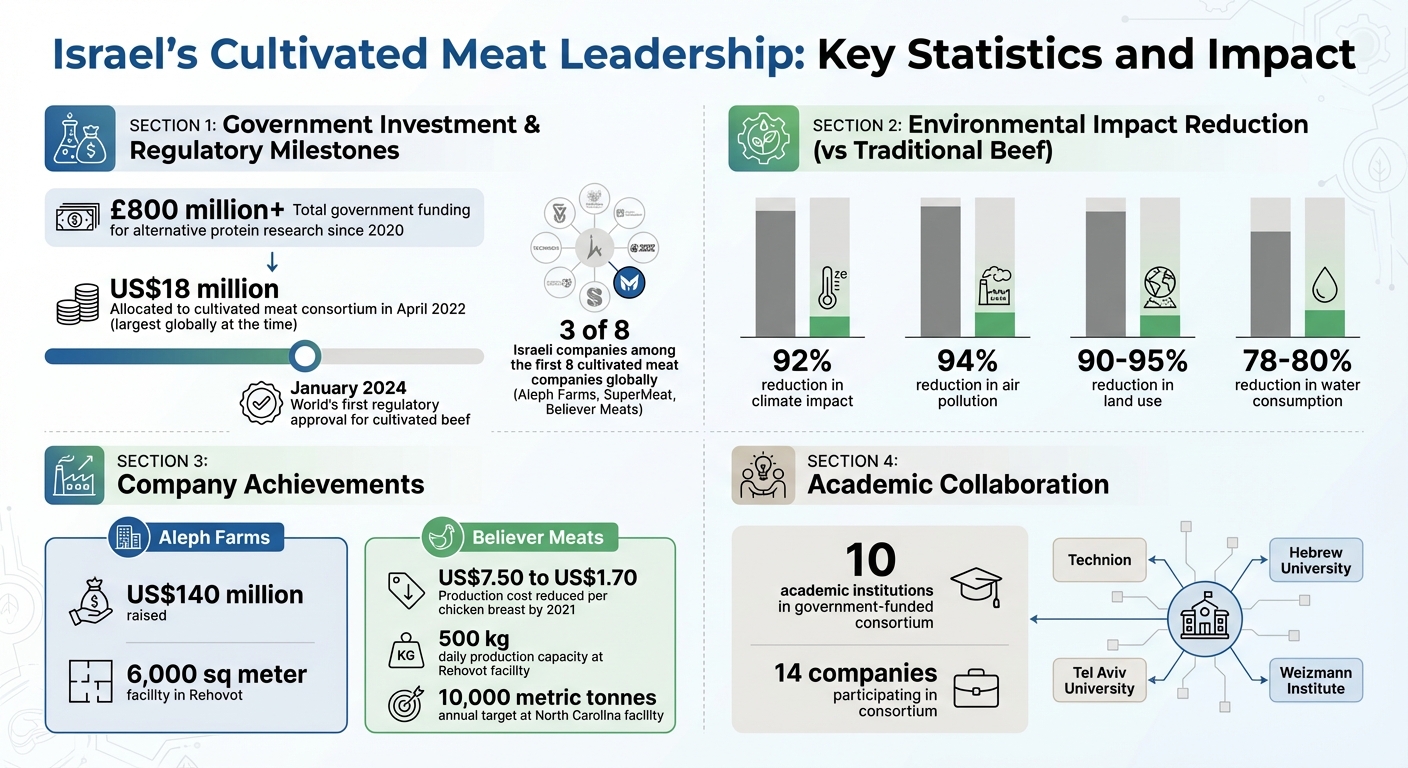
Israel's Cultivated Meat Leadership: Key Statistics and Impact
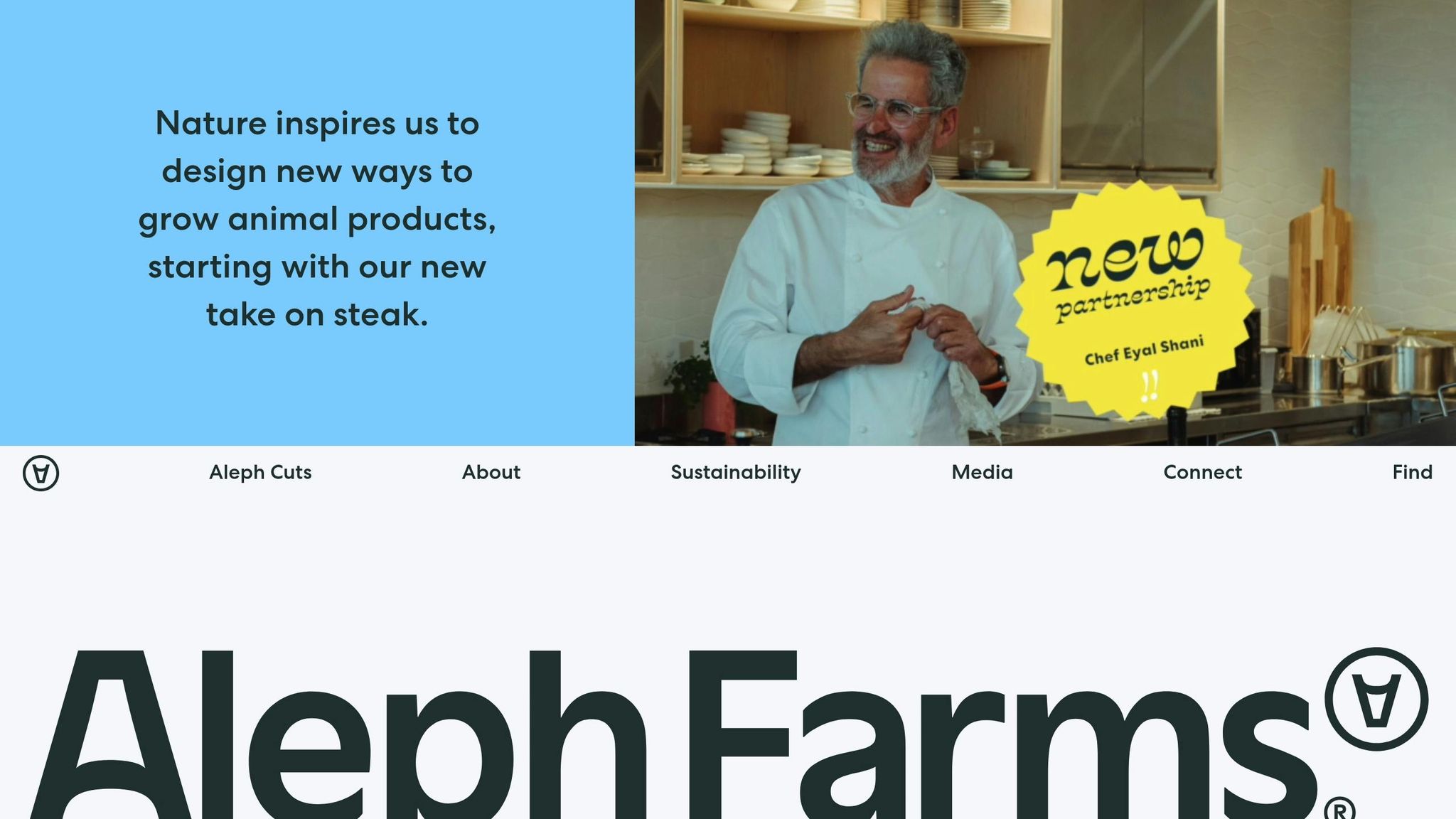
Aleph Farms gets approval to sell cultivated steaks in Israel | WION
sbb-itb-c323ed3
Why Israel Leads in Cultivated Meat
Israel has emerged as a global leader in Cultivated Meat, thanks to its thriving startup ecosystem, strong government support, and cutting-edge academic research. These factors come together to drive rapid innovation and commercialisation in this field.
A Thriving Startup and Technology Ecosystem
Known as the "Startup Nation", Israel provides an ideal environment for Cultivated Meat ventures. Its entrepreneurial spirit, focused on tackling global challenges, has naturally extended to cellular agriculture. Notably, three of the first eight Cultivated Meat companies - Aleph Farms, SuperMeat, and Believer Meats - originated in Israel, highlighting the country's early and influential role in this industry [2].
The proximity of research institutions and startups fosters collaboration and knowledge transfer, enabling companies to draw on expertise from fields like software development and the science behind cultivated meat [9]. This synergy has been key to advancing Cultivated Meat technologies.
"We already were a hub for software, and [alt-meat] isn't very different. A lot of what our industry amounts to is getting very good technology. In addition to that, we are entrepreneurs here." – Ido Savir, Co-founder and CEO, SuperMeat [9]
Israeli startups have also embraced innovative business models. Instead of investing in costly production facilities, they focus on international partnerships and contract manufacturing. For example, in January 2026, Aleph Farms partnered with Cell Agritech in Singapore, leveraging existing infrastructure in Singapore and Malaysia to establish a regional hub without building new plants [8].
Collaborations between biotech startups and established food companies have further accelerated progress. A notable example is Pluristem and Tnuva's 2021 joint venture, Plurinuva, which combined placental cell expansion technology with Cultivated Meat production, aiming for commercialisation by 2023 [9].
This entrepreneurial energy is amplified by robust government initiatives.
Robust Government Support
The Israeli government has prioritised food technology and alternative proteins as one of its top five national R&D areas [2][7]. In April 2022, the Israel Innovation Authority allocated US$18 million to a Cultivated Meat consortium, the largest of its kind globally at the time. This three-year initiative, co-led by Tnuva and Gaya Savyon, includes 14 companies and 10 academic institutions, such as Aleph Farms and SuperMeat [5].
Political backing has also played a significant role. In December 2020, Prime Minister Benjamin Netanyahu became the first world leader to taste Cultivated Meat during a visit to Aleph Farms. Following this, he instructed the establishment of a dedicated body to oversee the alternative protein sector, elevating it to a national priority [10][2].
Government-supported incubators like "The Kitchen Hub" and "Fresh Start" are instrumental in turning research into successful ventures. For instance, Aleph Farms was founded through The Kitchen Hub and has since raised over US$110 million [5][10].
"This is an unprecedented governmental commitment on a global scale, in a cellular agriculture consortium and more particularly cultivated meat which will enable Israel to maintain its leadership in one of the most significant areas in food tech." – Shay Cohen, Chief Innovation Officer at Tnuva and Chairperson of the Cultivated Meat Consortium [5]
Academic Excellence Driving Innovation
Israel's academic institutions provide the scientific foundation for its Cultivated Meat advancements. Leading universities such as the Technion – Israel Institute of Technology, Hebrew University, Tel Aviv University, and the Weizmann Institute of Science contribute expertise in stem cells and tissue engineering [9].
These institutions often collaborate with the private sector to bring research to market. For instance, Aleph Farms was co-founded in 2017 as a partnership between the Strauss Group and the Technion, using the university's tissue engineering research to create the world's first cultivated ribeye steak [2][7].
The government-funded Cultivated Meat consortium brings together 10 academic institutions, including the Hebrew University of Jerusalem, the Technion, and the Volcani Center, to develop scalable production methods [5][11]. This collaboration ensures that lab breakthroughs translate into commercially viable products.
"Collaboration between leading cultivated meat companies, leading food manufacturers who bring the expertise of implementing these technologies in scale and researchers in academia, is essential to create a breakthrough in this field and to make the products accessible to the general public." – Shay Cohen, Chief Innovation Officer at Tnuva and Chairperson of the Cultivated Meat Consortium [5]
Leading Israeli Cultivated Meat Companies
Israel has become a hotbed for Cultivated Meat innovation, thanks to its supportive ecosystem and forward-thinking companies. Two standout firms, Aleph Farms and Believer Meats, are leading the charge, each with a unique approach to making Cultivated Meat a commercial reality.
Aleph Farms: Cultivated Beef Production
Aleph Farms, founded in 2017, achieved a groundbreaking milestone in December 2023 by securing the world's first regulatory approval for cultivated beef from Israel's Ministry of Health. This marked the first time any non-chicken Cultivated Meat received such approval globally [12][13]. Under its brand, Aleph Cuts, the company unveiled the "Petit Steak", a cultivated steak made from the cells of a premium Black Angus cow named Lucy. The production process avoids foetal bovine serum and antibiotics, using unmodified cells in a sterile environment. A plant protein matrix, crafted from soy and wheat, acts as a scaffold, giving the product its steak-like texture [12].
Since its inception, Aleph Farms has raised around US$140 million and launched a 6,000-square-metre production facility in Rehovot in February 2022 [4][5]. The company plans to introduce its products at a 50–100% premium compared to traditional beef, aiming for price parity with conventional meat within five years [4]. Analysts estimate that once price parity is achieved, Aleph Cuts could deliver a 47% profit margin [12].
"This green light is the first ever for non-chicken cultivated meat anywhere in the world. It is also the first for cultivated meat of any kind in the Middle East." – Aleph Farms [12]
While Aleph Farms focuses on premium products, Believer Meats prioritises scaling production and reducing costs.
Believer Meats: Scaling Production Capacity
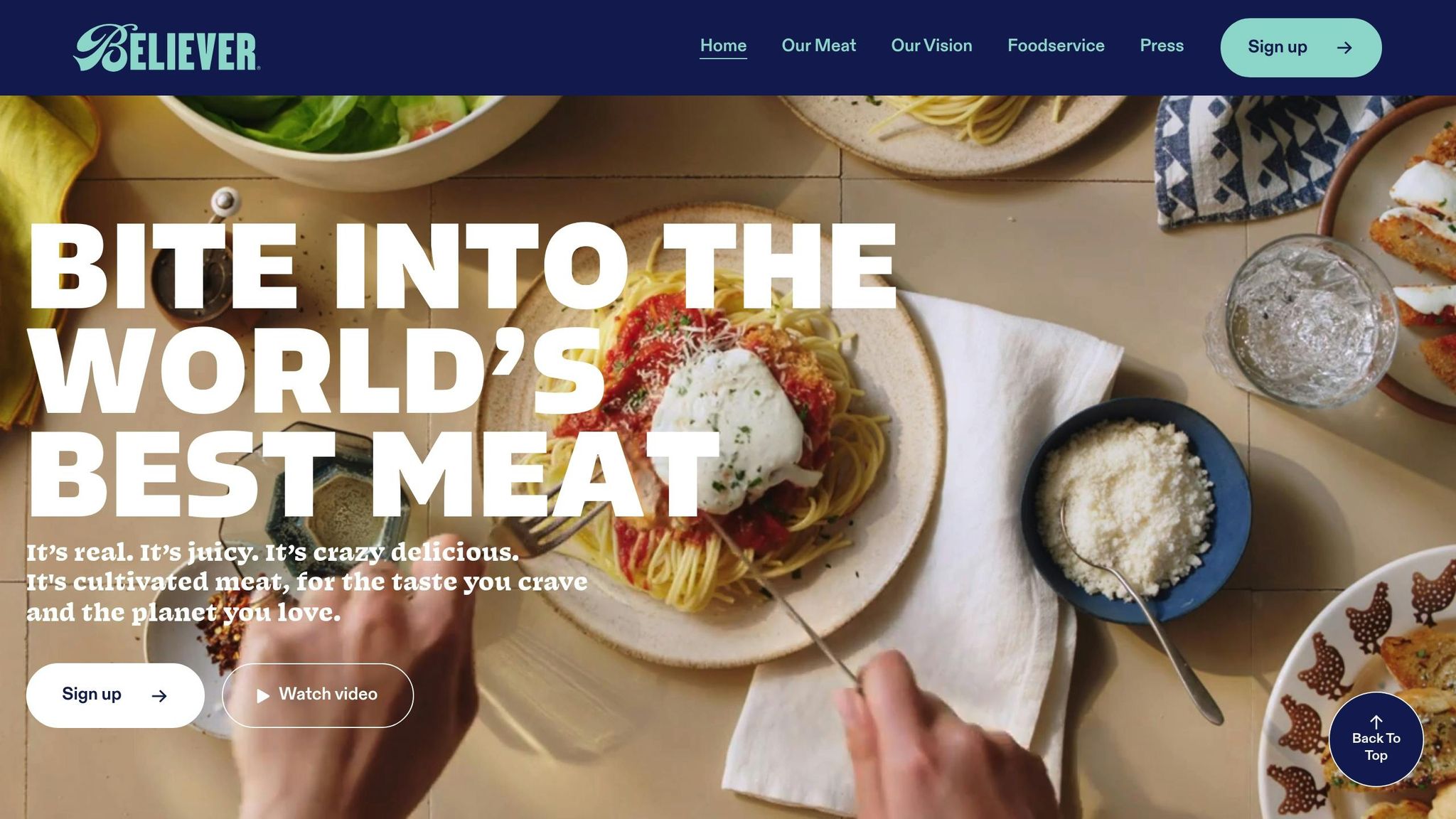
Believer Meats has taken a different approach, focusing on cost reduction and large-scale production to make Cultivated Meat more accessible. The company uses proprietary stainless-steel fermenters that reproduce cells at rates ten times higher than industry standards. Thanks to this technology, the production cost of a cultivated chicken breast dropped dramatically from US$7.50 to US$1.70 by 2021 [15].
In December 2022, the company started construction on what is set to become the world's largest Cultivated Meat production facility in Wilson, North Carolina. Meanwhile, its Rehovot facility has already achieved a daily production capacity of 500 kilogrammes [15]. This focus on manufacturing efficiency highlights how technological advancements are driving Cultivated Meat closer to widespread affordability.
Together, Aleph Farms and Believer Meats are solidifying Israel's reputation as a global leader in Cultivated Meat innovation, blending premium product development with scalable production solutions.
How Israel's Work Affects the Global Industry
Israel's advancements are making waves far beyond its borders, influencing global industry practices and setting new standards. These developments are helping to address environmental challenges, establish regulatory frameworks, and foster trust among consumers - key elements for the worldwide success of cultivated meat technology.
Reducing Environmental Impact
Israeli companies are leading the way in showing how cultivated meat can dramatically shrink the environmental footprint of meat production. Compared to traditional beef farming, cultivated meat could lower its climate impact by up to 92%, cut air pollution by as much as 94%, and reduce land use by 90% to 95% [1]. Even water consumption drops significantly - by 78% to 80% - a vital achievement for a country like Israel, where water scarcity is a constant challenge [2][7].
"Land here is scarce, and water is expensive. This is why we must focus on innovation." – Didier Toubia, CEO and Co-founder, Aleph Farms [2]
The global scalability of these efforts is becoming evident. In December 2022, Believer Meats began construction on a massive 200,000-square-foot facility in North Carolina, USA. This plant aims to produce 10,000 metric tonnes of meat annually, showing how Israeli-developed sustainability technology can transition from small-scale projects to industrial production [7]. Recognising this potential, the Israeli government has prioritised food tech and alternative proteins as one of its top five national R&D focuses, underlining the role of innovation in tackling the climate crisis. These environmental achievements are also crucial for gaining consumer trust and industry acceptance.
Gaining Consumer Trust and Industry Confidence
Israel has taken bold steps to build consumer understanding and confidence in cultivated meat. A pivotal moment came in December 2020, when the Israeli Prime Minister publicly endorsed cultivated meat, signalling strong governmental and public support [2].
Transparency has been another cornerstone of Israel's approach. In November 2020, SuperMeat introduced "The Chicken", a restaurant in Ness Ziona where diners could enjoy cultivated chicken burgers made in an adjacent pilot facility. This unique setup allowed customers to witness the production process firsthand, addressing scepticism with openness rather than marketing spin [14].
Israel has also taken a leading role in regulatory innovation. In January 2024, the Ministry of Health granted the world's first approval for cultivated beef, setting a precedent for safety standards and labelling requirements [1]. This regulatory milestone serves as a roadmap for other nations, including those in Europe, where platforms like Cultivated Meat Shop are working to educate consumers about this emerging food category. Israel’s groundwork in regulation and transparency is laying the foundation for broader market acceptance across the globe.
Conclusion
Israel has firmly established itself as a leader in the cultivated meat industry, thanks to a combination of government backing and a vibrant startup ecosystem that transforms research into commercial success. The Israel Innovation Authority’s US$18 million grant underscores its dedication to advancing cultivated meat technologies [5]. By leveraging decades of expertise in stem cell research and tissue engineering - rooted in its medical and defence sectors - Israel has created a model that accelerates progress effectively [8, 19].
This momentum has even caught the attention of the country’s top leadership.
"Israel will become a powerhouse for alternative meat and alternative protein." – Benjamin Netanyahu, Prime Minister of Israel [2]
Israel is not only shaping the future of alternative proteins domestically but also positioning itself as a key global supplier of advanced production technologies [6]. Israeli companies are making waves in international markets, driving investment and innovation on a global scale.
The regulatory approval granted to Aleph Farms in January 2024 [3] sets a precedent that could inspire similar advancements in other regions, including Europe. Initiatives like Cultivated Meat Shop are helping UK consumers get acquainted with this emerging food category, paving the way for cultivated meat to transition from Israeli labs to dining tables worldwide.
What Israel has achieved proves that cultivated meat is no longer just a futuristic idea. It is now a strategic national priority with the potential to transform global food systems, reduce environmental footprints, and enhance food security.
FAQs
Is cultivated meat safe to eat?
Yes, cultivated meat is safe to eat. After thorough safety evaluations, the Israeli government approved cultivated beef for consumption. These assessments covered areas like toxicology, potential allergens, and microbiological safety, ensuring it meets the necessary standards for human consumption.
When will cultivated meat be available in the UK?
Cultivated meat might soon make its way to the UK market, pending regulatory approval. The approval process is being fast-tracked thanks to a collaboration with Israel. The first application was submitted in August 2023, and the UK government is working to reduce the typical approval timeline of 18 months to two years. If all goes as planned, cultivated meat could be available as early as February 2026, depending on the speed of legalisation efforts.
Why is Israel ahead of other countries?
Israel stands out as a leader in the cultivated meat industry, thanks to its vibrant innovation ecosystem, proactive government backing, and a thriving foodtech startup scene. The country has attracted significant public and private investments, including an €18 million government grant dedicated to research in this field. Companies like Aleph Farms and Super Meat are at the forefront of this progress, driven by a strong emphasis on scientific research, a willingness to embrace entrepreneurial risks, and policies designed to prioritise advancements in alternative proteins.


