

Cultivated meat, grown from animal cells in sterile lab environments, lasts 1 to 5 days in the fridge when stored at 0°C to 5°C. Ground products typically last 1–2 days, while whole cuts can stay good for up to 5 days, similar to conventional meat. Proper refrigeration, intact packaging, and attention to use-by dates are key factors in maintaining quality and safety.
Quick Tips:
- Ground cultivated meat: Use within 1–2 days.
- Whole cuts: Consume within 3–5 days.
- Packaging matters: Vacuum-sealed or MAP packaging can extend shelf life.
- Spoilage signs: Discard if it smells sour, feels slimy, or changes colour.
To keep it safe, store cultivated meat on the coldest shelf in your fridge, avoid cross-contamination, and follow the use-by dates. Proper handling ensures your meals are safe, tasty, and ready when needed.
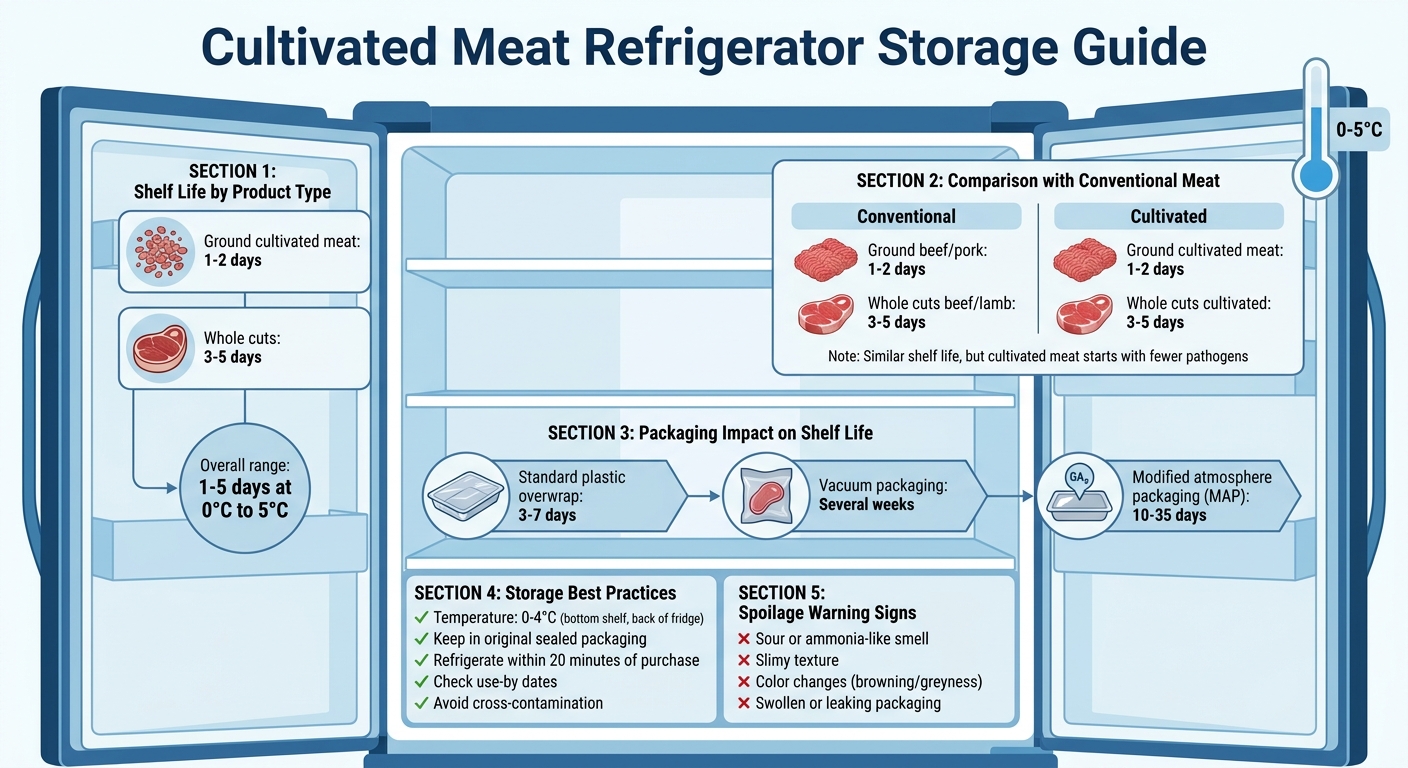
Cultivated Meat Refrigerator Storage Guide: Shelf Life and Safety Tips
How Long Does Cultivated Meat Last in the Fridge?
Expected Shelf Life
When stored in the fridge at a steady temperature of 0°C to 5°C, cultivated meat generally lasts 1 to 5 days. This is comparable to the shelf life of conventional meat.
The lifespan depends on the type of product. Ground products, due to their larger surface area, typically last 1–2 days, while whole cuts can remain fresh for up to 5 days, depending on how they’re processed and packaged.
To keep cultivated meat fresh, treat it as you would conventional meat. Ensure your fridge is at the right temperature, store it on the coldest shelf (usually at the bottom), and consume ground products within a couple of days of purchase or defrosting.
Comparison with Conventional Meat
Cultivated meat’s shelf life is almost identical to that of conventional meat because their composition is so similar. For example:
- Ground beef or pork from traditional sources usually lasts 1–2 days in the fridge, just like ground cultivated meat.
- Fresh poultry and whole cuts of beef or lamb typically stay fresh for 3–5 days, which aligns with whole cut cultivated products.
One potential difference lies in how cultivated meat is produced. Since it’s grown in sterile bioreactors, it might start with fewer foodborne pathogens compared to conventional meat processed in slaughterhouses. However, once harvested, processed, and packaged, it becomes just as vulnerable to spoilage bacteria as any fresh meat.
sbb-itb-c323ed3
Let's Talk: Storing Meats
Factors That Affect Shelf Life
Several elements play a role in determining how long cultivated meat remains fresh, beyond just following standard storage practices.
Temperature Control
Maintaining a fridge temperature of 0–4°C is critical for preserving cultivated meat. At this range, bacterial growth slows significantly, which helps retain the meat's texture, flavour, and overall quality.
Even minor temperature changes can drastically reduce its shelf life. Since cultivated meat is nutrient-rich, it becomes more susceptible to spoilage once removed from its sterile environment. While it starts with fewer microorganisms than traditional meat, it still demands careful cold chain management after processing and packaging. To maximise freshness, place it in the coldest part of your fridge, where temperature fluctuations are minimal.
Packaging Methods
Packaging plays a key role in how long cultivated meat stays fresh. Modified atmosphere packaging (MAP) - which replaces air with gases like carbon dioxide and nitrogen - can extend shelf life to 10–35 days by slowing bacterial growth [1]. Vacuum packaging, which removes oxygen entirely, can keep whole-muscle cuts fresh for several weeks. However, this method may temporarily darken the meat due to deoxygenation [1].
On the other hand, standard plastic overwrap, while preserving the meat's colour, limits its shelf life to just 3–7 days because exposure to oxygen accelerates bacterial growth [1]. To ensure maximum freshness, it's best to keep the meat in its original packaging until you're ready to use it.
Product Type and Processing
The type and processing of cultivated meat also influence its shelf life. Ground cultivated meat, due to its larger surface area, typically lasts only 1–2 days. In contrast, whole cuts can stay fresh for up to 5 days. Advanced techniques, such as high-pressure treatment, can further inhibit microbial growth, extending the shelf life of some products to 5–7 days.
Interestingly, the uniform tissue structure of cultivated meat may react differently to environmental factors compared to conventional meat. However, ongoing research continues to explore these unique properties and their impact on shelf life.
Best Practices for Storing Cultivated Meat
Refrigeration Tips
Once you’ve purchased cultivated meat, refrigerate it straight away - don’t let it sit at room temperature for more than 20 minutes. As soon as you get home, place it on the bottom shelf of your fridge, preferably at the back where it’s coldest. This spot keeps the meat consistently cool and avoids any drips contaminating other foods.
Make sure your fridge stays between 0°C and 5°C. Household fridges can fluctuate by 2–3°C depending on where items are placed, which can shorten the meat’s shelf life. If your fridge struggles to maintain this range, even with regular maintenance, it might be time to call a professional. Also, keep an eye on the purchase and use-by dates on the packaging to ensure the meat stays safe to eat.
Use-By Dates and Spoilage Signs
Always stick to the use-by dates printed on the packaging - these are legal safety guidelines in the UK, not just a suggestion. Check the meat when you buy it and every couple of days after that for any signs of spoilage. Watch out for sour or ammonia-like smells, changes in colour (like browning or greyness), or a slimy texture. Packaging issues like swelling, leaks, or visible condensation are also warning signs.
If you notice any of these, it’s best to throw the product away immediately. Don’t taste it to check - trust your senses. A 2024 study on cell-cultured proteins found that 85% of samples stayed safe for up to 5 days when stored at 0–5°C, compared to just 70% for conventional beef under the same conditions [2].
Avoiding Cross-Contamination
Proper storage isn’t just about temperature - it’s also about avoiding cross-contamination. Keep cultivated meat in its original sealed packaging, or if it’s already opened, transfer it to an airtight glass or food-safe plastic container. Store it separately from raw vegetables, dairy, and cooked foods. If fridge space is tight, consider setting aside a specific shelf or drawer just for cultivated meat to maintain hygiene.
Clean up spills as soon as they happen to stop bacteria from spreading and to prevent odours from lingering. Make sure the storage area is tidy, and wipe down fridge shelves monthly with a mild disinfectant. Also, avoid stacking heavy items on top of the packaging to prevent any crushing or damage.
Conclusion
Proper storage is essential for keeping Cultivated Meat fresh and safe to eat. When refrigerated at 0–4°C, it typically lasts 1–5 days, which is comparable to fresh conventional meat. Thanks to its production in sterile bioreactors, Cultivated Meat might even stay usable for an extra 1–2 days compared to conventional mince or poultry.
To get the most out of your Cultivated Meat, focus on three things: maintaining a consistent fridge temperature (0–4°C), using appropriate packaging, and keeping an eye on use-by dates and signs of spoilage. Remember, temperatures above 5°C can reduce shelf life, while vacuum-sealing helps retain freshness longer than standard packaging.
Be alert for spoilage indicators like sour smells, slimy textures, or changes in colour. To avoid cross-contamination, store Cultivated Meat in sealed containers, separate from ready-to-eat foods, and clean any spills right away.
For more detailed storage tips and updates on Cultivated Meat safety in the UK, visit Cultivated Meat Shop. You can also join their waitlist to stay informed about new products and recommendations. Following these steps will help keep your Cultivated Meat both safe and enjoyable.
FAQs
Can I eat cultivated meat after the use-by date?
It's important to avoid eating cultivated meat beyond its use-by date. Look out for signs of spoilage, such as a bad smell, unusual discolouration, a slimy feel, or damaged packaging. If you notice any of these, the meat is no longer safe to eat. Always inspect carefully before consuming.
Does opening the pack shorten cultivated meat’s fridge life?
Yes, opening the packaging can reduce the fridge life of cultivated meat. Once exposed to air, microbes, and other environmental factors, its freshness typically lasts for about two days. To maintain its quality, transfer it to an airtight container and refrigerate it immediately.
Can I refreeze Cultivated Meat after defrosting?
Refreezing cultivated meat after it has been defrosted is a bad idea. Doing so increases the risk of bacterial growth and spoilage. To ensure both safety and quality, it's best to consume thawed cultivated meat within 1–2 weeks.


