

Yes, you can refreeze cultivated meat, but only if you follow strict safety and storage guidelines. Thaw it in the fridge at 5°C or below, use within 24 hours, and refreeze within three days. Avoid refreezing if the meat has been exposed to temperatures above 8°C for over two hours. Each freeze-thaw cycle affects texture and moisture, so expect some quality loss. Proper freezing in sealed containers at -18°C minimises damage and ensures safety, highlighting the importance of cold chain management.
Key points to remember:
- Thaw in the fridge: Never at room temperature.
- Refreeze only once: To limit texture and flavour changes.
- Check for spoilage: Discolouration, odours, or dryness mean it’s best discarded.
- Store correctly: Use sealed or vacuum-sealed packaging to prevent freezer burn.
While refreezing is safe, the meat’s texture may become softer or drier, making it better suited for stews or sauces.
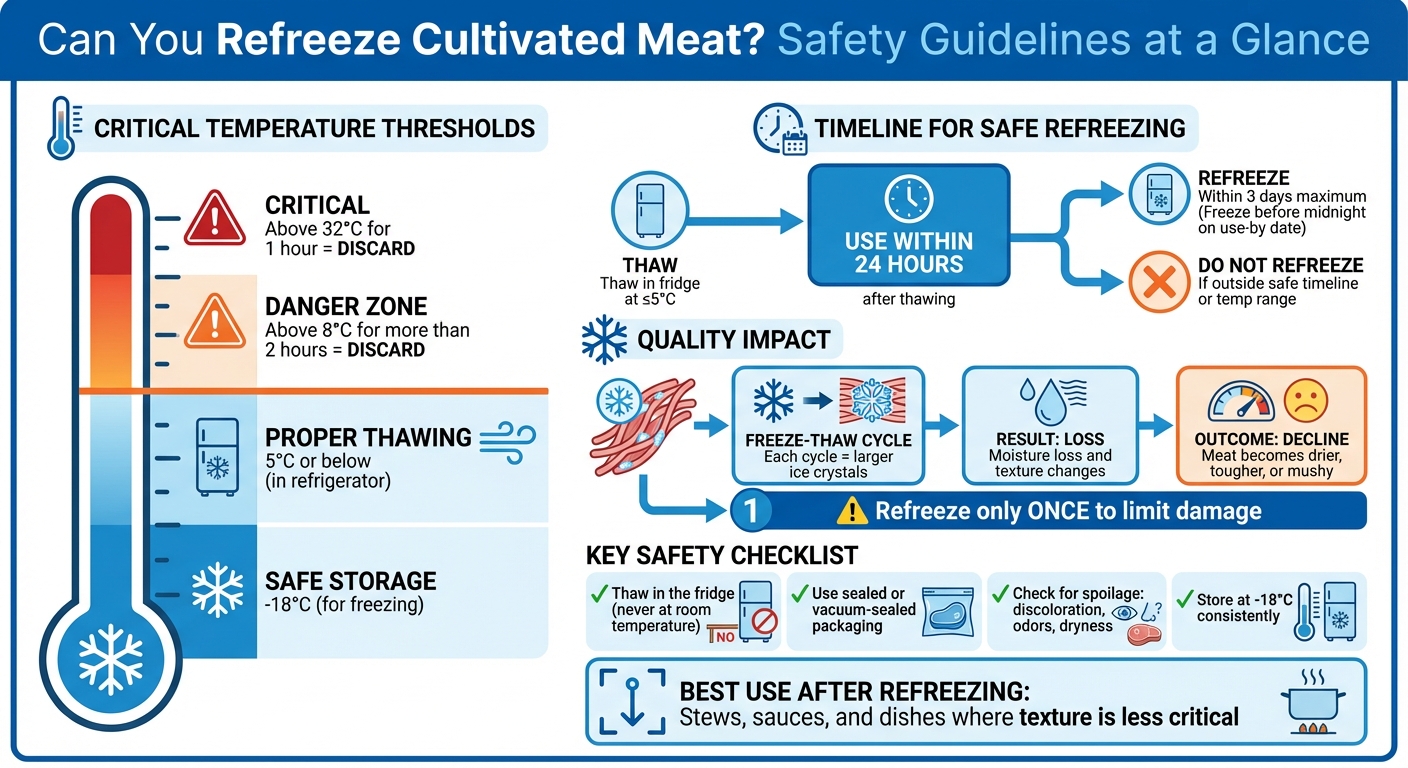
Safe Refreezing Guidelines for Cultivated Meat: Temperature and Timeline Requirements
Can You Refreeze Meat
sbb-itb-c323ed3
Can You Refreeze Cultivated Meat? Key Considerations
Yes, you can refreeze cultivated meat, but only if you follow strict guidelines. Just like conventional meat, the safety and quality of refreezing depend on how the meat was thawed and stored.
Food Safety Risks
Freezing doesn't eliminate bacteria - it simply halts their growth. Certain bacteria, like Listeria monocytogenes, can survive freezing temperatures and become active again when the meat thaws [3].
"Freezing limits or halts the growth of bacteria, but it rarely kills them. This is especially true for psychrotrophic pathogens such as Listeria monocytogenes, which can survive sub-zero temperatures."
– Adrian Carter [3]
To safely refreeze, meat must be thawed in a refrigerator at 5°C or below and kept there for no more than three days. If the meat has been exposed to temperatures above 8°C for over two hours - or above 32°C for even one hour - it should be discarded [3][5]. Additionally, refreezing can slightly raise the temperature of the surrounding frozen items, which may compromise their safety. Repeated freeze-thaw cycles also create an ideal environment for bacteria like Staphylococcus aureus to multiply [4].
While safety is the primary concern, refreezing also affects the meat's quality, which is a key factor in cultivated meat food waste considerations.
Changes to Quality and Texture
Even if refreezing is done safely, it comes with a trade-off: the meat's quality takes a hit. Each freeze-thaw cycle forms larger ice crystals, which damage cell membranes and result in moisture loss and texture changes.
"Slow freezing creates large, disruptive ice crystals. During thawing, they damage the cells and dissolve emulsions. This causes meat to 'drip' and lose juiciness."
– USDA Food Safety and Inspection Service [7]
Repeated cycles leave the meat drier, tougher, or even mushy when cooked [6]. On top of that, oxidation of fats and proteins can alter its flavour and appearance. For example, red meat may turn dark or develop a pale brown hue due to oxygen deprivation or freezer burn [7].
"Freeze-thaw cycles increased the microbial counts and decreased the water holding capacity, amino acids, and mineral concentrations of beef and chicken meats."
– Nawaz et al. [4]
While food stored consistently at -18°C (0°F) remains safe indefinitely, its quality diminishes over time. For cultivated meat, this means that while refrozen products are still edible, they may lack the juiciness and texture of meat that has only been frozen once.
Best Practices for Freezing and Refreezing Cultivated Meat
How to Freeze Cultivated Meat Properly
The key to maintaining the quality of cultivated meat is freezing it quickly and correctly. Ensure you freeze the meat before midnight on its use-by date. If that’s not possible, it’s best to cook and eat it immediately instead of freezing it later[8].
Set your freezer to -18°C and store the meat in clean, sealed, or vacuum-sealed containers. This step helps avoid contamination and prevents freezer burn. Vacuum-sealing is particularly effective because it shields the meat from oxidation, which can harm its cellular structure and affect its quality[3].
Additionally, always check the packet for specific storage instructions, as manufacturers often provide tailored advice for their products[8].
By following these guidelines, you’ll ensure the meat stays safe and in good condition, even if refreezing becomes necessary.
How to Refreeze Safely
When it comes to refreezing, proper thawing is essential. Always defrost cultivated meat in the refrigerator at 5°C or below. Once thawed, use it within 24 hours or refreeze it within three days[3][8].
"Once food is defrosted, it should be used within 24 hours."
– Food Standards Agency (FSA)[8]
Keep in mind that every freeze-thaw cycle can affect the meat's texture and flavour, so it’s important to follow these guidelines carefully.
Before refreezing, check for any signs of spoilage. Look out for dry or discoloured patches, unusual odours, or noticeable changes in texture. Even if the meat is technically safe to eat, such changes indicate a decline in quality. Also, avoid placing warm or room-temperature meat directly into the freezer, as this can lead to thermal shock and affect the freezing process[3].
If you receive a frozen delivery that has partially thawed, treat it as refrigerated. In this case, use the meat within 72 hours to ensure its safety and quality[3].
How Cultivated Meat Shop Educates Consumers
Freezing and handling cultivated meat properly is key to ensuring both quality and safety.
Building Consumer Confidence
Cultivated Meat Shop offers clear, practical advice on how to store cultivated meat, preparing UK consumers for its eventual availability. As a Product of Animal Origin (POAO), cultivated meat must meet the same strict hygiene and safety regulations as traditional meat in the UK[9]. This means consumers can rely on familiar food safety practices when dealing with these products.
The platform draws on insights from the UK's CCP regulatory sandbox (running from February 2025 to 2027) to simplify complex storage guidelines[1][9]. This includes advice on optimal storage temperatures, freezing timelines, and defrosting procedures. Such guidance ensures quality and safety are maintained, even if refreezing is necessary.
"We'll gather evidence about the sort of information consumers will need to know about cell-cultivated products before they buy them. There are still lots of questions we need to be able to answer about how they might be labelled, their nutritional content, [and] any potential allergens."
– Food Standards Scotland[1]
These efforts, often supported by public awareness campaigns, also help consumers stay informed about the rapidly evolving cultivated meat market.
Preparing for Cultivated Meat Availability
While cultivated meat isn't yet on the shelves in the UK, Cultivated Meat Shop keeps consumers informed about regulatory updates. This includes news on a £1.6 million investment in safety research and the anticipated submission of 15 applications from cultivated meat businesses by early 2027[1].
Through product previews, waitlist options, and detailed advice on handling, storage, and refreezing, the platform equips consumers with the knowledge they'll need to maintain quality when cultivated meat becomes available for purchase.
Conclusion
Handling cultivated meat with care ensures that refreezing it remains safe. Always thaw it in the refrigerator, and only refreeze if the temperature stays at or below 8°C and the product still feels chilled. Like traditional meat, cultivated meat is classified as a Product of Animal Origin (POAO) and follows the UK's strict hygiene regulations[9].
That said, every freeze–thaw cycle affects the meat's cell structure, leading to moisture loss and changes in texture. While refreezing is safe, the resulting texture may make it better suited for dishes like stews or sauces, where texture isn't as noticeable[2].
What sets cultivated meat apart is its production in sterile bioreactors, which eliminates protective microflora. This makes proper storage even more essential for maintaining its safety and quality[1][10]. Its unique nature highlights the need for ongoing improvements to storage methods and shelf life.
With the UK's regulatory sandbox in place until 2027, safety protocols for cultivated meat are evolving to provide clearer, evidence-based handling recommendations[1].
FAQs
Can I refreeze cultivated meat if it was defrosted in the fridge?
Yes, you can refreeze cultivated meat, but only if it was defrosted in the fridge, stayed cold to the touch (below 8°C), and shows no signs of spoilage. Make sure the packaging is still sealed and follow UK food safety guidelines to ensure it remains safe to eat.
How can I tell if thawed cultivated meat has gone off?
To determine if thawed cultivated meat has gone bad, pay attention to key indicators like a foul smell, a slimy surface, or any unusual discolouration. Keeping it stored between 0°C and 4°C is essential to preserve its freshness and reduce the risk of spoilage.
Will refreezing change how cultivated meat cooks?
Refreezing cultivated meat can impact its texture and moisture content, potentially changing how it cooks. While it remains safe to eat if properly handled, it’s recommended to follow food safety practices and consume it shortly after thawing to preserve its quality.


